
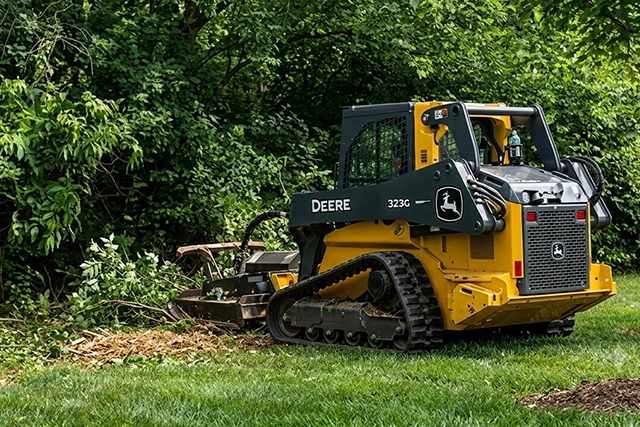
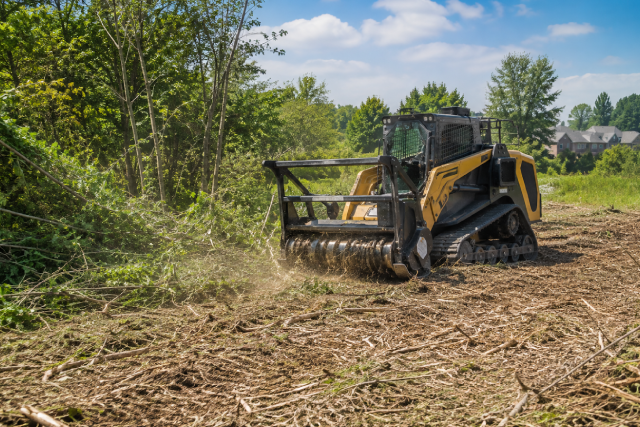
Brush rarely spreads all at once. It grows along fences, closes narrow paths, hides uneven ground, and gathers near places you need to reach. That slow spread makes brush clearing , necessary for landowners who want safer movement, clearer boundaries, and easier upkeep. Dry stems hold heat. Thick growth blocks sightlines. Tangled branches cover posts and rough ground. Our work starts by sorting site conditions into clear categories.
Brush density receives a value of light, medium, or heavy. Terrain receives a value of level, sloped, or uneven. Access receives a value of open, tight, or blocked. Those facts guide each pass. We remove growth that limits how you use the land. Careful clearing work on your property helps you spot new growth early, protect access routes, and keep neglected corners from closing again through the next dry season.
Around a home, brush can turn ground into space you stop using. Our brush clearing services open those areas without disturbing features you want to keep. We mark the work zone, protect trees and fences, and match the machine to the growth. Homeowners often ask us to address trouble spots:
These brush clearing services give you room to walk, inspect, and care for your property. The result is visible ground, defined edges, and a home site that feels easier to manage season after season.
Commercial land needs clear routes and visible boundaries. Our land brush clearing serves vacant parcels, ranch lots, farm ground, private access lanes, and sites. Brush creates delays when it crowds entrances, covers markers, or stops staff from checking areas. We plan the work around how people and equipment move across the property.
Each site receives working values. Vegetation height is recorded in feet. Stem thickness is marked as thin, medium, or woody. Route width is marked in feet. These details keep clearing focused, reduce wasted passes, and support reliable upkeep across the ground.
Our brush cutting services follow a simple process. We inspect the growth, mark the limits, choose the equipment, cut in planned passes, and review the finished area with the goal in mind. Soft growth receives lighter cutting. Dense woody stems receive slower, controlled passes. Sloped ground receives steady machine movement. Tight spaces receive a narrower working path.
When site conditions allow, cut material is mulched on the ground. Mulch placement stays close to the soil, which reduces loose piles and makes the area easier to revisit. Latitude Groundscape is a veteran-owned business serving Star and nearby Idaho communities. We know brush can quietly take space away from you through one dry season. Clearing gives that space back in a useful form. Contact our team for a property review, a clear work area, and a plan built around the growth standing on your land.
Seed-heavy weeds can quickly refill a cleared patch. We identify mature, spreading plants and remove them before they drop more seed. This helps slow future growth and gives you more time before the next round of brush clearing becomes necessary.
Our brush clearing in includes close attention to hidden wire, fallen limbs, buried debris, and old fence parts. Spotting these hazards early protects your property, reduces sudden stops, and keeps the clearing work moving in a steady way.
We note where thick brush returns fastest, including damp corners, shaded edges, and low spots. That record helps you plan future upkeep around real growth patterns. You can protect cleared space instead of waiting for the same trouble to return.
Light moisture may not stop the work, but soaked soil can become soft under heavy equipment. Waiting for firmer ground helps prevent deep ruts, soil movement, and machine tracks. Before starting brush clearing the crew should check ground firmness.
Yes, many vines can be cut and separated while the tree remains in place. The crew must avoid pulling hard growth from delicate bark. Thick vines may need to be cut into smaller sections and removed slowly to protect the trunk.
Small saplings may be included when their size, species, and location are reviewed before work begins. The agreed cutting limit should state the largest stem diameter being removed. This keeps valued young trees from being mistaken for unwanted woody growth.
Blackberry canes, thistles, poison ivy, and other irritating plants require careful handling. Workers use suitable clothing and avoid spreading broken plant pieces into clean areas. Property owners should point out any known patches before clearing begins so the work zone can be planned safely.
Yes. Sprinkler heads, shallow pipes, utility boxes, survey pins, wells, and other hidden features should be identified before machinery enters the brush. Clear markers help the operator keep a safe distance and reduce the chance of costly damage during cutting.
Latitude Groundscape serves homes and businesses with dependable excavation and property care, using capable equipment, local knowledge, and steady effort across every demanding site project.