
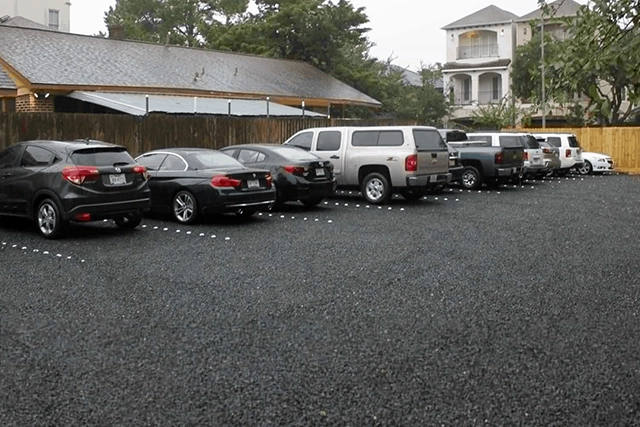
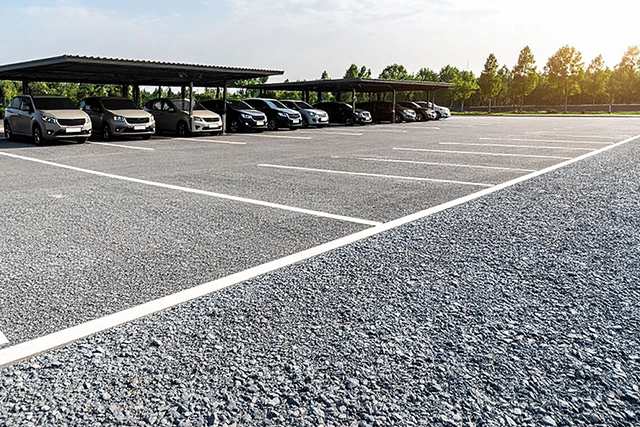
A busy property needs parking that stays firm through customer visits, employee shifts, service calls, and deliveries. That is why commercial gravel parking lots matter for offices, shops, work yards, storage sites, and growing local businesses. Soft soil can trap tires. Poor grading can leave water beside entrances. Loose rock can spread into traffic lanes and make the site look neglected.
Latitude Groundscape plans each lot around vehicle weight, daily traffic, turning space, drainage, and the number of parking stalls you need. The lot surface carries vehicles. The base supports the surface. The slope moves runoff away. This clear structure helps reduce ruts, muddy tracks, and repeated stone loss. A well-built gravel lot also gives visitors a cleaner arrival, keeps work vehicles moving, and helps your property handle busy days without constant surface trouble. It also keeps parked vehicles off mud.
The best layout starts with the way people and vehicles move across your site. During commercial gravel lot construction in we set the entrance width, parking rows, drive aisles, loading space, and turning room before aggregate is placed.
Each lot type has a set use, a set traffic load, and a set space plan. The layout guides movement. The base carries weight. The top layer gives tires a stable path. These details help drivers park with less confusion and help owners keep the property orderly.
Rain and traffic expose weak areas quickly. For commercial site surfacing near we study low spots, soil strength, runoff direction, and the pressure created by braking and turning. A crown may send water toward both sides. A cross slope may guide it toward one edge. Stronger base depth may be used near entrances, delivery lanes, or loading points.
Where the parking approach needs an access lane, methods linked to custom gravel driveway installation in can support that entry while the project stays focused on the lot. Key build details include:
These choices protect the parking area from early sinking, washout, and uneven wear each season.
Latitude Groundscape builds commercial gravel parking lots in around the real pace of your property. We inspect the site, mark the usable area, remove weak material where needed, shape the ground, place the base, spread surface stone, and compact each layer.
During commercial gravel lot construction in every step follows a clear purpose. The prepared ground supports the base. The base spreads the load. The finished grade directs water. The compacted surface keeps traffic moving. This order matters because skipped ground work often leads to deep ruts, puddles, loose edges, and repeat grading costs.
You receive a parking area made for your staff, customers, service vans, and delivery schedule. The finished lot gives your business a defined place to park, a cleaner route to the building, and a surface that is easier to manage as daily traffic continues through every season.
We plan work in sections so your staff, customers, and delivery drivers can reach the property. This phased approach keeps commercial gravel parking lots in usable during construction and reduces disruption around opening hours, loading times, and periods.
We account for future parking needs before setting the footprint. Extra turning room, planned expansion edges, and sensible access points make it easier to add stalls later without tearing apart the working area your business already depends on each day.
We shape loading and parking zones around actual vehicle movement, including trailer swing, reversing space, and stopping distance. This helps drivers enter, park, unload, and leave without awkward turns that slow operations or place unnecessary pressure on the gravel surface.
Dust usually increases when the surface becomes dry, loose, or short on fine material. The right gravel mix packs tightly and limits movement under tires. Regular surface checks also help catch loose areas before passing vehicles begin throwing dust toward entrances, parked cars, and nearby buildings.
Yes. Parking stalls can be organized with wheel stops, signs, numbered markers, or fixed boundary posts. These markers remain easier to see than painted lines on loose stone. Clear stall placement helps customers park evenly and keeps vehicles from taking up more space than needed.
Weed control starts with proper ground preparation before the stone is placed. Existing roots and plant growth should be removed from the parking footprint. A well-packed surface also leaves fewer open spaces where seeds can settle, grow, and spread across active parking areas.
A properly settled gravel lot can support careful snow clearing. The surface should be firm, even, and free from raised rock piles before winter. Plow blades may need to sit slightly above the gravel so they move snow without scraping away large amounts of surface stone.
The timing depends on traffic volume, vehicle weight, weather, and stone loss. Some commercial gravel parking lots need small amounts added to worn travel paths, while others need a broader surface refresh after several seasons. Routine checks help prevent thin spots from spreading.
Latitude Groundscape serves homes and businesses with dependable excavation and property care, using capable equipment, local knowledge, and steady effort across every demanding site project.