
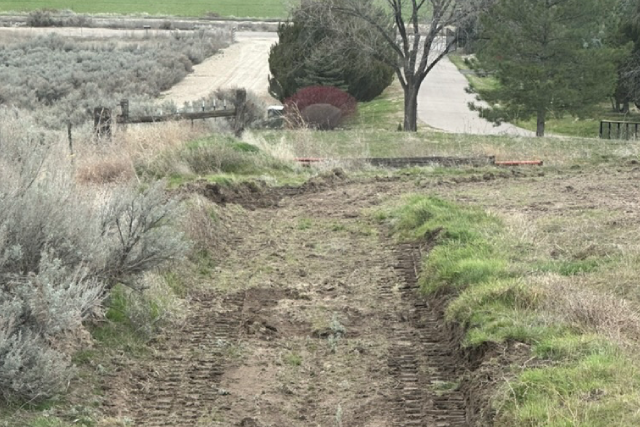
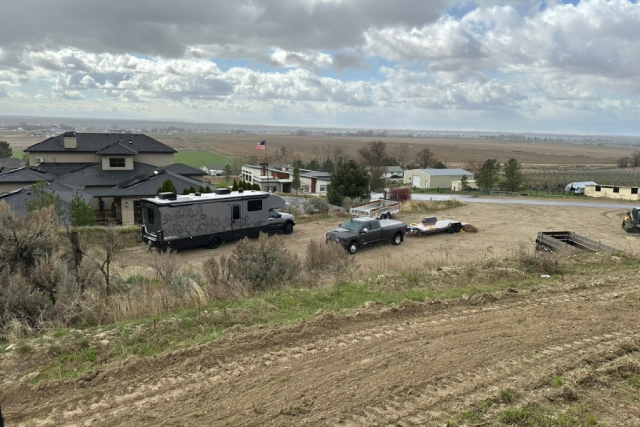
Dry grass, brush, weeds, and seasonal growth can form one long path across your property. That connected growth may run beside fences, barns, sheds, fields, or private drives. During dry months, the same path can carry fire across a wider area. Our fire break installation in reduces sections of continuous fuel without promising that every wildfire will stop. We focus on practical changes that reduce fuel buildup and make key parts of your land easier to reach.
At Latitude Groundscape, we plan each break around your boundaries, slope, access, and current land use. This helps separate managed and unmanaged land while improving access along the route. It can also support later mowing and seasonal vegetation control.
A fire break should follow the way your property is laid out and used. Acreage homes may need a route near outer boundaries or between a home and dry fields. We do not choose the width or route before seeing your land. Our best fire break services start with the ground, connected fuel, nearby structures, and available entry points. We also look at slopes, turns, fences, and sections that equipment must reach later. This gives your break a useful path rather than a random strip across the property.
Our planned routes support clearer boundaries, better access, and steady land care without making claims your property cannot guarantee.
Commercial land may contain large open sections, storage areas, access roads, work yards, or facilities near unmanaged growth. A clear process helps keep the work focused. As one of the local fire break contractors in we begin with a full look at the property. We review site access, boundaries, slopes, structures, work areas, and current vegetation. This allows us to set a route that supports land use without cutting through important traffic or work zones.
This process gives property managers a clear plan before equipment begins work. When your property needs fire break installation in call (208) 248-2820 to discuss the layout and current growth. We can review the site, explain the likely route, and talk through future care.
We look beyond the nearest patch of dry grass and study how growth connects across your property. Our fire break installation in follows those fuel patterns, along with your access and boundary needs.
We work along property edges, fence lines, fields, roadside areas, and difficult boundaries. That experience helps us plan breaks where heavy growth meets managed land. We also consider how you will inspect and maintain the route later.
We serve acreage properties, ranch lots, farms, vacant land, and broad commercial sites. Our equipment supports longer routes and uneven ground that small lawn machines may not handle. We match the work area to your property size and terrain.
It depends on your slope, your fuel, and what sits behind the line. Flat ground with light grass needs less width than a brushy hillside below your house. We go wider on uphill sides and near buildings. After we walk your property, we will give you a number and explain it.
No, and anyone who promises that is overselling it. A break takes fuel off a strip, which slows spread there and gives crews a place to work. Under high wind, embers carry well past any break. It improves your odds, but it is one part of protecting a property.
Just the edges, in most cases. The point is to break up connected fuel, not strip your land bare. We focus on perimeters, the ground around your buildings, and any strip where growth runs unbroken toward something you care about.
Usually yes. Big trees with clear trunks are not the problem. The trouble is the brush and dry growth underneath that carries flame up into the branches. We take out that lower layer and leave your trees standing.
Late winter into spring works best, so the line is ready before things dry out. We watch how quickly the grass cures here each year. If summer is already on you and your ground is heavy, call anyway.
Latitude Groundscape serves homes and businesses with dependable excavation and property care, using capable equipment, local knowledge, and steady effort across every demanding site project.